
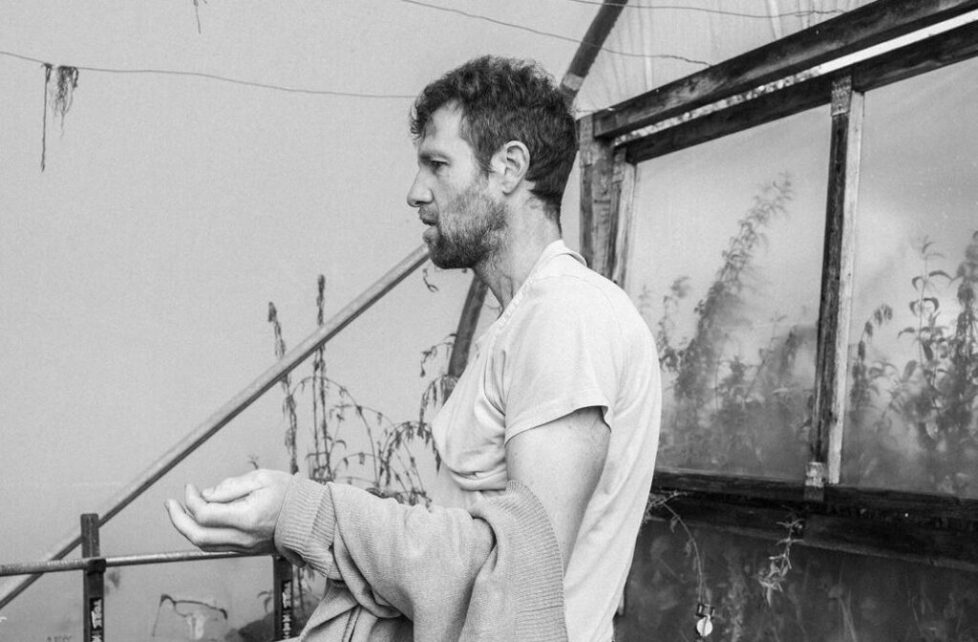
Former Biodynamic Agricultural College apprentice Laurie Donaldson has built all the facilities at an exciting new project, but now he has to make it work
Imagine you have a sizeable parcel of land, enough money to buy new machinery as well as polytunnels, build a packing shed and guaranteed staff salaries for the next couple of years. Not only that. There are a few dandelions and docks poking through the permanent pasture as you’d expect, but the soil is equal parts sand, silt and clay.
It sounds like a dream scenario, one that’s all too rare for most horticultural enterprises. But it’s the reality for former Biodynamic Agricultural College apprentice Laurie Donaldson. He joined Growing Local in October 2023 and has been busy creating a space for food on the BDA-certified, 19-acre Southside Farm ever since. A community interest company, Growing Local, secured £1.5 million from Stronger Towns funding in 2022. As one of the most deprived areas in the UK, the project formed part of a total of £22.4 million given to Hereford by the then-Conservative government.
“When I arrived, there was just a field with nothing in it,” says Laurie. Now they have six new polytunnels, a reservoir, and a shed full of gleaming new machinery. “It’s the best soil I’ve ever worked with, and the crops have proved that. Last year we dug out 8 tonnes of carrots by hand, and I could take out most of the weeds with a spring tine harrow.” Garlic, leeks, beetroot and celeriac have all over-wintered, with chard, spinach and Asian greens inside. Sugar snap peas and beans have recently been sown.
The key to growing vegetables
It’s not all perfect, however. “Wireworm is an issue, especially on lettuce,” says Laurie. “So we can’t grow that in volume. Also, the winter we’ve just had was awful. The brassicas rotted away because they were never able to dry out.” And electricity for the growing space isn’t in place yet, so there are no heat mats. As a result, Laurie bought aubergines, peppers, tomatoes, and cucumbers from Delfland Nurseries as plugs.
But the most important part of the set-up is the most hidden. “I spent ages on the irrigation,” says Laurie. “Researching all the pipe sizes, the connectors. It seems really basic, but this is the most important factor of all – it’s the key to growing vegetables.”
“It was a rich but also very intense time. You were never on your own; there were people around you all the time.”
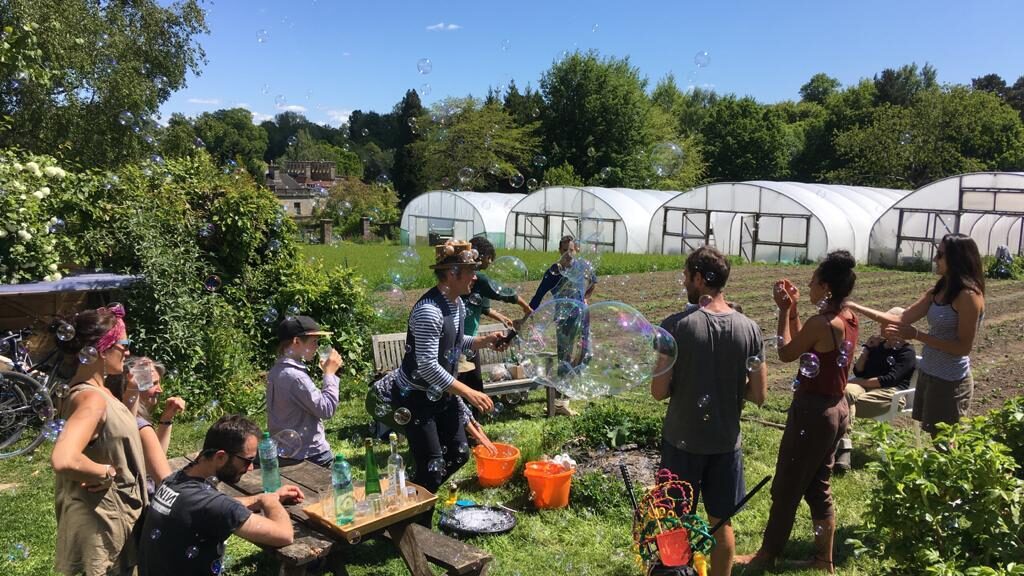
Laurie hosting an event at Michael Hall school, Forest Row, East Sussex
It also sounds like Laurie’s role has evolved beyond being just a head grower. “I’ve been dealing with contractors and civil engineers. It’s been a good learning experience, but challenging. Fortunately, the directors amended my contract to take account of all the additional work I’ve been involved in.”
Luckily too, Laurie has wider experience prior to Growing Local. He joined the apprenticeship scheme with the Biodynamic Agricultural College in 2012 at Oaklands Park, a Camphill property on the edge of the Forest of Dean. “It’s a beautiful place. I lived in a huge open room in the old mansion building, and there were views down over the Severn estuary. I worked weekends and evenings looking after residents, in addition to regular hours, so it was a rich but also very intense time. You were never on your own; there were people around you all the time.”
Transforming the growing space
As part of training with the Biodynamic Agricultural College to become a grower, Laurie received teaching in biodynamic theory, plus excursions to biodynamic properties around the UK. “The farm visits were great. It was so valuable to compare different places, seeing what works and why – even a robot milking place that we went to near Nottingham.”
But Laurie is honest about other factors. “When I joined Oaklands, it was the traditional Camphill model, where people don’t get paid but live on site, and residents have a co-worker looking after them. That changed to a care home with staff coming in to work there. It lost its identity during this period.”
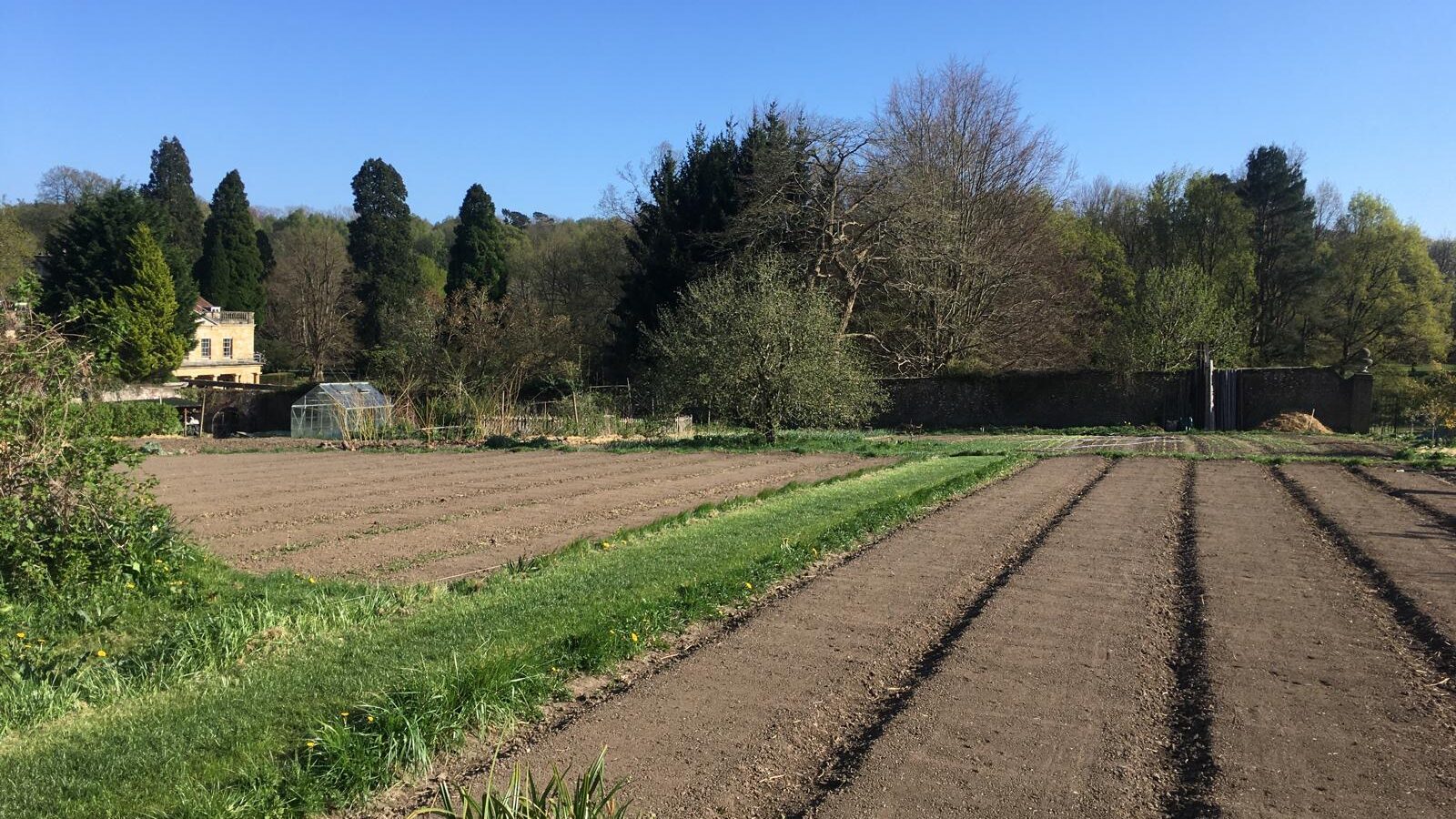
Beds prepped for sowing at Michael Hall school, Forest Row, East Sussex
“Compare a Victorian walled garden in a wealthy part of southern England, with decades of history where there is minimal financial pressure to where I’m at now.”
What followed was more secure. Laurie joined Michael Hall school in Forest Row after the apprenticeship and, over nine years, honed his growing skills, transforming the growing space and bringing in wholesale contracts for vegetables. He also learnt how to teach, although supplying food for the school kitchen, seemingly a natural link, never fully took off.
Then things became bumpy again. Laurie was all set to link up with a major project on a large estate nearby. But once the owner started questioning the need for spending on equipment during discussions, Laurie walked away. “You have all those resources but don’t want to commit to buying something that’s a basic requirement for growing?” he asks reflectively. Next, Laurie joined Heckfield Place, but then left after a month when he found out there was someone else in place making all the decisions.
Finding a market for the produce
Fortunately, soon after, Laurie saw an advert for a head grower on a farm on the edge of Hereford. His educational experience at Michael Hall helped secure the Growing Local role, but in all other respects, the two enterprises couldn’t be more different. “Compare a Victorian walled garden in a wealthy part of southern England, with decades of history and where there is minimal financial pressure to where I’m at now. It’s chalk and cheese.”
The lack of wealth in the Hereford area, while helping secure funding, means that running the business is far more challenging. Laurie has agreed to send vegetables to a couple of wholesalers as a consequence. “It’s not really in the ethos of the organisation. We’re about helping people – and supplying restaurants in London with our food doesn’t exactly fit into that. Two directors here were particularly unhappy and fought hard against the new contracts. But we have to be realistic that there is a class system in the UK, and that applies to food as well. We’re not in an affluent area, and we do have to make this project pay. Also, we are still working with local people. We supply excess to food banks and have connections to many organisations in Hereford.”
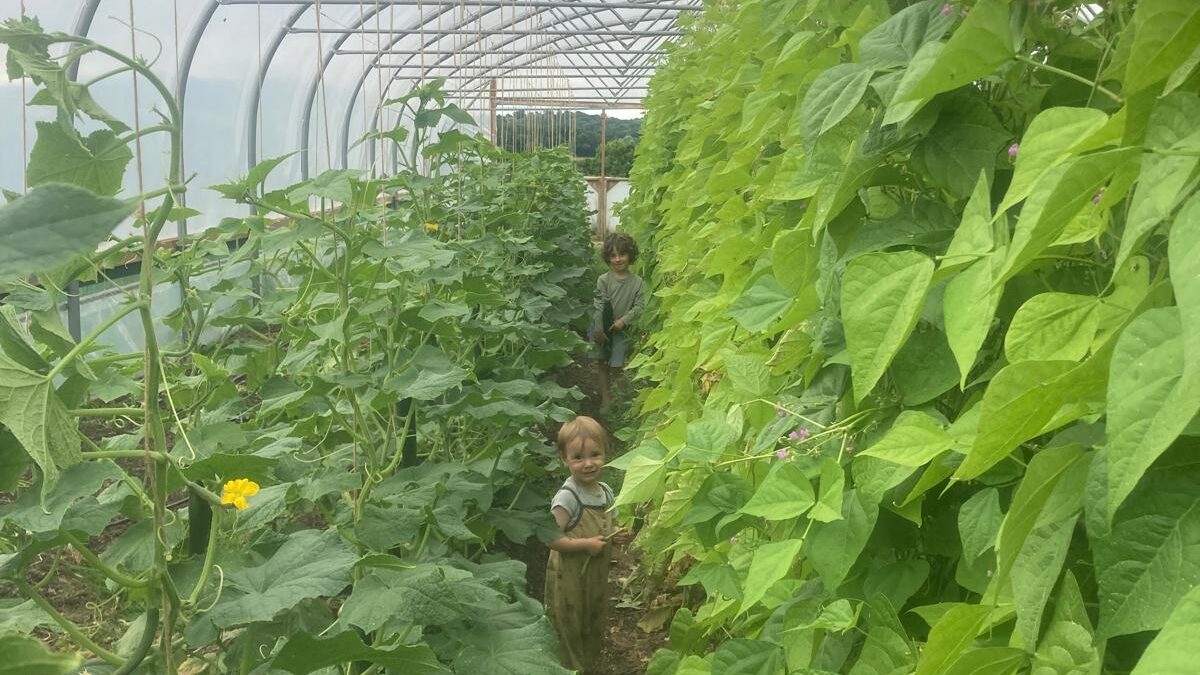
Laurie’ two children in one of the polytunnels at Growing Local, Herefordshire
Laurie wants to increase box scheme members from 90 to 150 by the end of the year. They use hubs for pick up, and Laurie is keen to increase those too, beyond Hereford. Additionally, there’s a little extra charged to buyers for a bike scheme that delivers direct, called Pedicargo. Production plans match these numbers, where the aim is to double the growing area to 3 acres, ultimately reaching 5 acres.
“I admit we’re very lucky to have the £1.5 million funding. It’s not the usual story of a horticultural enterprise struggling to make things work. But the money covering salaries is now over. We need to significantly increase output, and make it pay.” Meanwhile, Laurie is building his own house while living out of a caravan with two young children over the next 18 months or so. It sounds like challenging times? Laurie agrees: “This is a key year.”